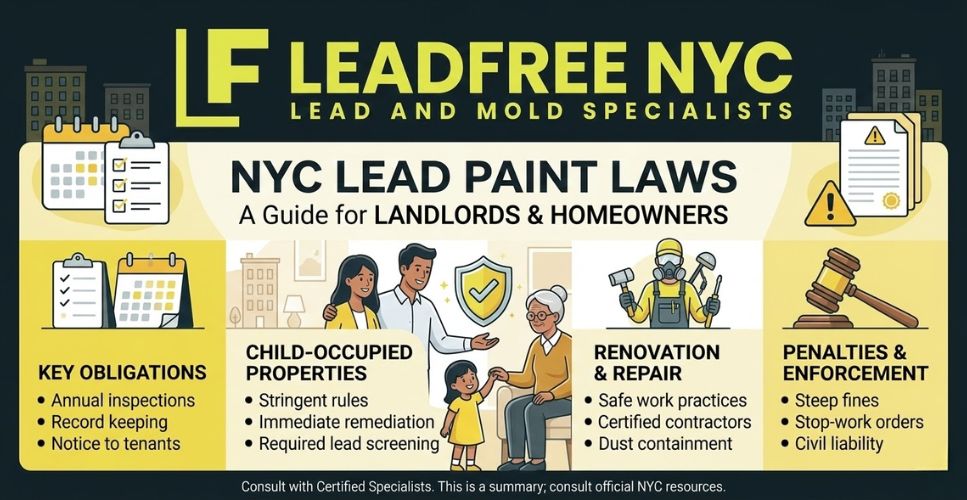
Lead paint remains a serious concern in many older properties across New York City. Because a large portion of NYC housing was built before lead paint regulations were introduced, property owners must follow strict safety and compliance rules. Understanding lead paint NYC regulations, inspection requirements, and landlord responsibilities helps protect residents—especially children—from lead exposure while keeping property owners compliant with local laws.
This guide explains what landlords and homeowners should know about lead paint in NYC, including legal obligations, health risks, inspections, and prevention steps.
Understanding Lead Paint in NYC
Lead-based paint was widely used in residential buildings before 1960 and remained available until it was banned for residential use in the United States in 1978. Many buildings across New York City still contain layers of older paint that may include lead.
When lead paint deteriorates, it can create hazardous dust and paint chips. Exposure to these materials—especially for young children—can cause serious health problems. Because of these risks, New York City has strict regulations regarding lead paint safety and inspections.
For buildings constructed before 1960 or those built between 1960 and 1978 where lead paint is known to exist, property owners must follow NYC lead safety requirements.
Why Lead Paint Is a Serious Health Risk
Lead exposure is particularly dangerous for children under six years old. Even small amounts of lead dust can lead to long-term health issues.
Common health concerns associated with lead exposure include:
Developmental delays in children
Learning and behavioral problems
Damage to the nervous system
Hearing and speech issues
Kidney and organ damage in severe cases
Because these risks are well documented, NYC has implemented strict lead paint safety laws to protect residents and prevent exposure.
Key NYC Lead Paint Laws Property Owners Must Follow
New York City enforces several important regulations regarding lead paint NYC compliance. The most important local regulation is Local Law 1 of 2004, also known as the NYC Childhood Lead Poisoning Prevention Act.
1. Local Law 1 of 2004
This law requires landlords of buildings built before 1960 (or between 1960–1978 if lead paint is known) to:
Identify apartments where children under six live
Inspect units annually for lead paint hazards
Safely repair peeling paint or damaged surfaces
Use safe work practices when repairing painted surfaces
Maintain proper records of inspections and repairs
2. Annual Notice Requirement
Landlords must send tenants an annual notice asking whether a child under six lives in the apartment. This helps identify units that require stricter inspection and maintenance.
3. Lead Hazard Inspections
If peeling paint or potential hazards are identified, landlords must correct them using approved lead-safe work practices.
4. Safe Renovation and Repair
Any work that disturbs painted surfaces in older buildings must follow lead-safe procedures to prevent dust contamination.
Failure to follow these regulations can result in violations, fines, and legal liability.
Lead Paint Testing and Inspection in NYC
Testing is the most reliable way to determine whether lead paint is present in a building.
Professional inspectors typically use specialized tools such as XRF analyzers to detect lead in paint without damaging surfaces. This method is widely recognized for its accuracy and is commonly used during lead paint inspections in NYC.
Lead paint inspections are often required in situations such as:
Property purchases or real estate transactions
Renovation projects
Landlord compliance inspections
Housing violations or tenant complaints
Risk assessments for older buildings
Testing helps property owners identify potential hazards and take corrective action before problems escalate.
Responsibilities for NYC Landlords
Landlords in New York City have clear responsibilities regarding lead safety. These responsibilities include:
Annual Apartment Inspections
Apartments in pre-1960 buildings must be inspected each year for peeling paint or other potential hazards.
Repairing Lead Hazards
If peeling paint or lead hazards are found, landlords must repair them promptly using certified lead-safe methods.
Keeping Compliance Records
Landlords should maintain documentation for inspections, repairs, tenant notices, and lead safety procedures.
Hiring Qualified Professionals
When testing or repairing potential lead hazards, landlords should work with experienced professionals who understand NYC lead paint regulations.
Responsibilities for Homeowners
Although many lead paint laws focus on landlords, homeowners should also take lead safety seriously.
Homeowners in older properties should consider:
Conducting lead paint inspections
Testing painted surfaces before renovations
Hiring certified contractors for lead-safe work
Maintaining painted surfaces to prevent deterioration
These steps help protect families and ensure safe living conditions.
Preventing Lead Paint Hazards in NYC Homes
Preventing exposure is the most effective way to manage lead paint risks.
Here are practical steps property owners can take:
Regularly check for peeling or damaged paint
Keep painted surfaces well maintained
Clean dust from windowsills and floors frequently
Use certified professionals for renovation work
Conduct professional lead paint inspections when needed
Taking preventive action can significantly reduce the risk of lead exposure.
Professional Lead Paint Services in NYC
Because lead paint regulations are complex, many property owners choose to work with professionals who specialize in testing and compliance.
LeadFree NYC Specialists provide services that help property owners identify and manage lead paint hazards while meeting NYC legal requirements. Professional testing and inspections help ensure buildings remain compliant with city regulations and safe for occupants.
Final Thoughts
Lead paint remains an important safety issue for older properties across New York City. Understanding lead paint NYC laws, health risks, and inspection requirements helps landlords and homeowners protect residents while staying compliant with city regulations.
Regular inspections, safe maintenance practices, and professional testing can help identify hazards early and prevent serious health risks. By staying informed and proactive, property owners can maintain safer living environments for families throughout NYC.
Frequently Asked Questions
What year houses in NYC may contain lead paint?
Buildings built before 1960 are most likely to contain lead paint, although properties built between 1960 and 1978 may also have lead paint if it was used.
Is lead paint illegal in NYC?
Lead paint itself is not illegal in older buildings, but property owners must properly manage and maintain it to prevent hazards.
How do you test for lead paint in NYC?
Professional inspectors often use XRF testing equipment, which can detect lead in paint without damaging walls or surfaces.
Who is responsible for lead paint removal in NYC?
Landlords are responsible for addressing lead hazards in rental properties, especially when children under six live in the apartment.
When should you get a lead paint inspection?
Lead paint inspections are recommended when purchasing older properties, before renovations, or when peeling paint or hazards are suspected.