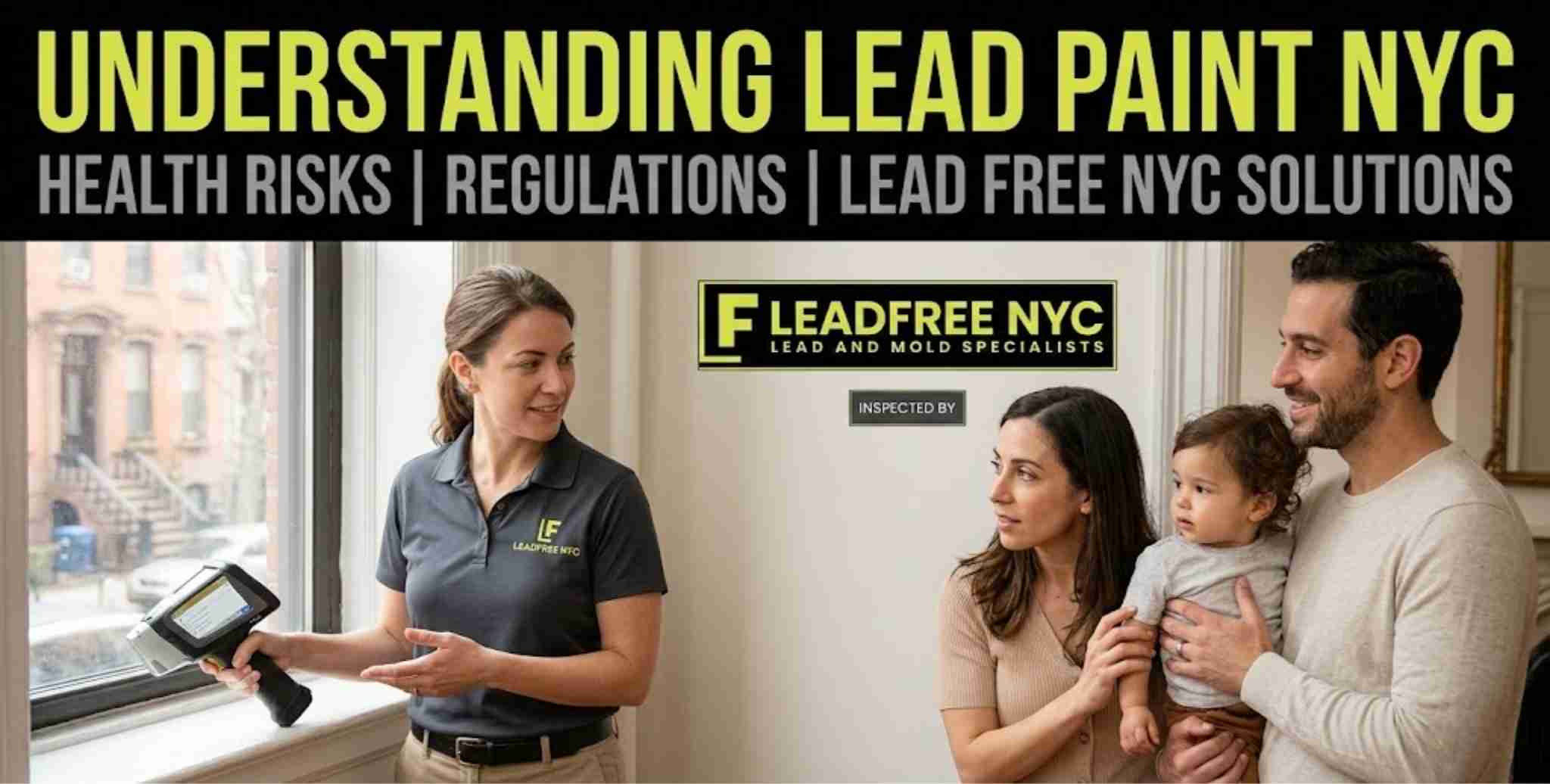
Lead paint NYC remains a major housing safety issue in buildings constructed before 1978. Under NYC Local Law 1, property owners must inspect, test, and remediate lead hazards to protect children and maintain compliance. Professional lead testing NYC services help landlords meet Lead Free NYC standards and avoid violations.
If you own or manage property in New York City, understanding lead paint regulations is not optional — it is legally required.
What Is Lead Paint NYC?
Lead-based paint contains toxic lead particles. In NYC, buildings constructed before 1960 are presumed to contain lead paint unless proven otherwise. Many buildings built between 1960 and 1978 may also contain it.
When paint deteriorates — peeling, chipping, cracking, or turning into dust — it becomes hazardous. Lead dust can settle on:
Floors
Windowsills
Door frames
Toys and furniture
Children under six are at highest risk of exposure.
Health Risks of Lead Exposure
Lead poisoning can occur even at low levels. Medical research shows that exposure may cause:
Developmental delays
Learning disabilities
Behavioral issues
Reduced attention span
Nervous system damage
Pregnancy complications
Because symptoms are not always visible immediately, proactive lead testing NYC is critical in older properties.
Local Law 1 NYC Explained (Lead Paint Regulations)
New York City enforces strict regulations under Local Law 1 of 2004 (NYC Childhood Lead Poisoning Prevention Act).
Who Must Comply?
Owners of residential buildings built before 1960 (and some between 1960–1978) where a child under six lives.
Key Requirements:
Annual inspections for lead hazards
Correction of peeling paint and friction surfaces
Use of EPA-certified contractors
Safe work practices during repairs
Proper documentation and record keeping
Failure to comply can result in:
HPD violations
Civil penalties
Litigation risk
Tenant complaints
This is why structured leadfreenyc compliance support is essential for landlords.
What Is Lead Testing NYC?
Lead testing NYC involves certified inspection procedures to determine the presence of lead-based paint and related hazards.
Common Testing Methods:
XRF (X-ray fluorescence) analysis – Non-invasive testing
Paint chip sampling – Laboratory confirmation
Dust wipe sampling – Detects contaminated surfaces
Visual hazard assessments – Identifies deterioration
Professional testing ensures results meet NYC Department of Housing Preservation & Development (HPD) standards.
Working with a specialized provider such as Leadfree NYC ensures inspections are performed according to regulatory guidelines.
Lead Free NYC: Why Compliance Matters
Achieving Lead Free NYC compliance protects:
Tenants and children
Property owners from penalties
Long-term building value
Rental reputation
NYC boroughs including Brooklyn, Queens, Bronx, Manhattan, and Staten Island contain thousands of pre-1978 buildings. Proactive compliance reduces enforcement risk citywide.
Step-by-Step Compliance Process
Step 1: Schedule Lead Testing NYC
Certified professionals inspect and test suspect surfaces.
Step 2: Identify Hazards
Testing determines whether lead-based paint is present and deteriorating.
Step 3: Perform Safe Remediation
Only EPA-certified contractors should handle lead stabilization or removal.
Step 4: Clearance Testing
Post-remediation dust wipe testing confirms safety.
Step 5: Maintain Records
Documentation must be kept for HPD review.
Leadfree NYC provides structured compliance services aligned with NYC regulations, helping landlords manage inspections, documentation, and corrective actions.
Website reference: https://leadfreenyc.co/
Common Lead Paint NYC Violations
Property owners may receive violations for:
Peeling paint in child-occupied units
Failure to conduct annual inspections
Improper repair methods
Missing documentation
Not using certified contractors
Early lead testing NYC reduces the likelihood of violations and enforcement actions.
Estimated Timeline for Lead Hazard Correction
Inspection scheduling: 1–5 days
Testing results: Same day (XRF) or lab turnaround
Remediation: Depends on severity
Clearance testing: After completion
Prompt action ensures compliance deadlines are met.
Frequently Asked Questions
Is lead paint still common in NYC?
Yes. Many residential buildings constructed before 1978 may contain lead-based paint.
Is lead testing NYC mandatory?
Annual inspections are required in qualifying buildings with children under six.
What happens if a landlord ignores lead paint NYC rules?
HPD may issue violations, fines, and potential legal enforcement.
Can landlords remove lead paint themselves?
No. Safe remediation must follow EPA lead-safe work practices.
What does Lead Free NYC mean?
It refers to compliance with NYC regulations and confirmation that lead hazards have been properly addressed.
How often should lead inspections occur?
At least annually in qualifying residential units.
Final Thoughts
Lead paint NYC remains a serious regulatory and health issue in older buildings. With strict enforcement under Local Law 1, landlords must take proactive steps to conduct lead testing NYC, correct hazards, and maintain compliance under Lead Free NYC standards.
By partnering with experienced professionals like Leadfree NYC, property owners can navigate inspection requirements, avoid violations, and maintain safer residential environments throughout New York City.