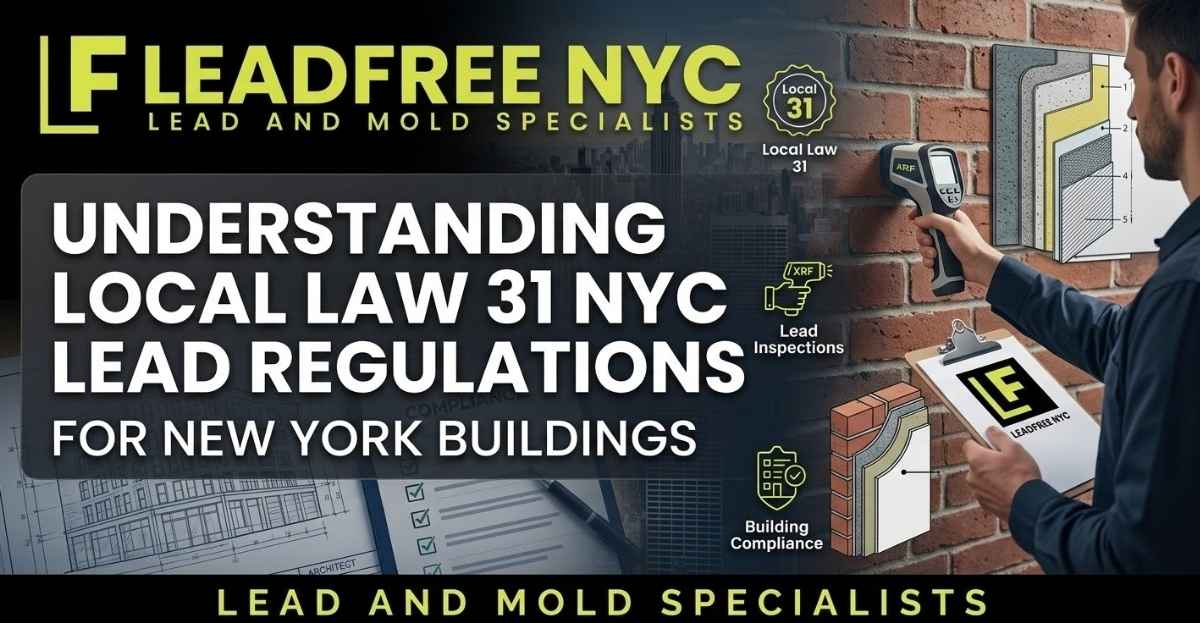
Lead exposure remains a significant public health concern in older residential buildings across New York City. To strengthen housing safety and reduce the risk of lead poisoning, the city introduced Local Law 31, which requires property owners to conduct XRF testing to detect lead-based paint in residential buildings built before 1960.
Understanding local law 31 nyc lead regulations is essential for landlords, property managers, real estate professionals, and building owners who want to maintain compliance and avoid violations. This guide explains how Local Law 31 NYC works, which buildings are affected, testing requirements, compliance responsibilities, and how owners can prepare.
Local Law 31 NYC Lead: Quick Summary
Applies to residential buildings built before 1960
Requires XRF testing of painted surfaces
Helps identify the presence of lead-based paint
Inspection results must be documented and maintained
Designed to improve lead safety in New York housing
This regulation helps authorities and property owners identify potential lead hazards and take necessary steps to protect residents.
What Is Local Law 31 NYC Lead Law?
Local law 31 nyc lead regulations require property owners of residential buildings constructed before 1960 to perform lead paint testing using X-ray fluorescence (XRF) technology.
Previously, many buildings were assumed to contain lead paint based on construction year. Local Law 31 NYC introduced a requirement for actual testing rather than assumptions, allowing owners to confirm whether lead-based paint is present.
The law is part of New York City's broader initiative to prevent childhood lead exposure and improve housing safety.
Why Local Law 31 Was Introduced
New York City has one of the oldest housing inventories in the United States. Many buildings built before 1960 contain multiple layers of paint, some of which may include lead.
Exposure to lead dust or deteriorating lead paint can cause serious health issues, especially in children. Because of these risks, the city implemented Local Law 31 to strengthen testing and identification of lead hazards.
Key goals of Local Law 31 NYC lead regulations include:
Identifying buildings that contain lead-based paint
Reducing childhood lead exposure
Increasing transparency in housing safety
Improving enforcement of lead safety regulations
Buildings Covered Under Local Law 31 NYC
The Local Law 31 NYC lead requirements mainly apply to residential properties constructed before 1960.
Buildings typically affected include:
Multi-family residential buildings
Rental apartment buildings
Residential properties built before 1960
Buildings where children under six years old may reside
If a building was built before 1960, it is generally assumed that lead-based paint may be present unless verified through testing under Local Law 31 NYC.
Local Law 31 Lead Testing Requirements
One of the primary requirements of local law 31 nyc lead regulations is conducting XRF lead paint testing on painted surfaces.
Testing must examine various surfaces inside residential units and common areas.
Surfaces Commonly Tested
Walls
Doors and door frames
Window frames and sills
Baseboards
Moldings and trims
Other painted surfaces
XRF testing helps determine whether lead is present without damaging the surface.
Once testing is completed, the results must be recorded and kept as part of the building’s compliance documentation.
What Is XRF Lead Paint Testing?
XRF (X-ray fluorescence) testing is the approved method used to detect lead in paint under Local Law 31 NYC.
Inspectors use a handheld XRF analyzer that scans painted surfaces and instantly identifies whether lead is present.
Benefits of XRF Testing
Non-destructive inspection method
Immediate and accurate readings
Complies with NYC regulatory standards
Efficient testing for large buildings
Because Local Law 31 NYC lead compliance requires reliable results, inspections should be performed using certified XRF equipment by trained professionals.
Who Can Perform Local Law 31 XRF Testing
Only trained and qualified professionals should conduct lead paint inspections under Local Law 31 NYC.
Professionals performing the inspection should have:
Approved XRF testing equipment
Proper certification and training
Knowledge of NYC housing regulations
Experience in lead hazard inspections
Using qualified inspectors helps ensure that the testing results meet regulatory standards.
Local Law 31 Inspection Deadlines
New York City requires property owners to complete lead paint inspections within specific timeframes.
Owners of residential buildings built before 1960 must complete XRF testing and maintain records showing whether lead-based paint is present.
Failing to complete testing may lead to:
Housing violations
Regulatory penalties
Compliance issues during property inspections
Building owners are encouraged to schedule inspections early to avoid compliance risks.
Record Keeping Requirements Under Local Law 31
Proper documentation is an important part of Local Law 31 NYC lead compliance.
Property owners must maintain records that include:
XRF inspection reports
Locations where testing was conducted
Results confirming presence or absence of lead paint
Compliance documentation for housing authorities
These records may be requested during housing inspections or regulatory reviews.
Responsibilities of Building Owners
Building owners have several responsibilities under Local Law 31 NYC.
Key Responsibilities
Conduct XRF testing of painted surfaces
Maintain accurate inspection records
Address lead hazards if detected
Follow NYC lead safety practices during renovations
Provide documentation if requested by inspectors
Meeting these requirements helps property owners maintain compliance and reduce potential liability.
Consequences of Non-Compliance
Failure to comply with local law 31 nyc lead regulations may lead to enforcement actions from New York City housing authorities.
Possible consequences include:
Housing violations
Financial penalties
Increased regulatory inspections
Legal liability related to lead exposure
Property owners who proactively complete testing and maintain records are less likely to face compliance issues.
Benefits of Early Compliance
Completing Local Law 31 NYC lead testing early provides several advantages.
Key Benefits
Reduced risk of housing violations
Improved safety for residents
Strong documentation for property management
Better preparation for housing inspections
Increased transparency in building safety
Early compliance helps building owners manage lead safety responsibilities more effectively.
How Property Owners Can Prepare for Local Law 31
Owners of qualifying buildings can take proactive steps to meet Local Law 31 NYC requirements.
Preparation Checklist
Identify buildings constructed before 1960
Schedule professional XRF lead paint testing
Maintain organized inspection records
Review NYC lead safety regulations
Address hazards if lead-based paint is detected
Working with experienced inspection professionals can help ensure that testing meets Local Law 31 compliance standards.
Future Impact of Local Law 31 in New York City
As New York City continues to strengthen housing safety laws, Local Law 31 will remain an important regulation for identifying lead hazards in older buildings.
By requiring verified lead paint testing and documentation, the law improves transparency and helps protect residents from potential exposure.
For property owners and building managers, understanding local law 31 nyc lead requirements is an essential step toward maintaining safe and compliant residential properties.
Frequently Asked Questions
What is Local Law 31 NYC lead testing?
Local Law 31 NYC lead testing requires building owners to perform XRF inspections of painted surfaces in residential buildings built before 1960 to determine whether lead-based paint is present.
Which buildings must comply with Local Law 31 NYC?
Most residential buildings built before 1960 must comply with Local Law 31 NYC lead regulations, particularly rental properties where children may live.
What is XRF testing for Local Law 31?
XRF testing uses a handheld device that scans painted surfaces to detect lead content without damaging the paint.
What happens if a building owner does not comply?
Non-compliance with Local Law 31 NYC lead regulations can result in housing violations, financial penalties, and regulatory enforcement actions.
Why is Local Law 31 important?
Local Law 31 helps identify lead-based paint hazards in older buildings and improves housing safety by requiring accurate testing and proper documentation.